
The Great Orchestration
 Jack Ryder·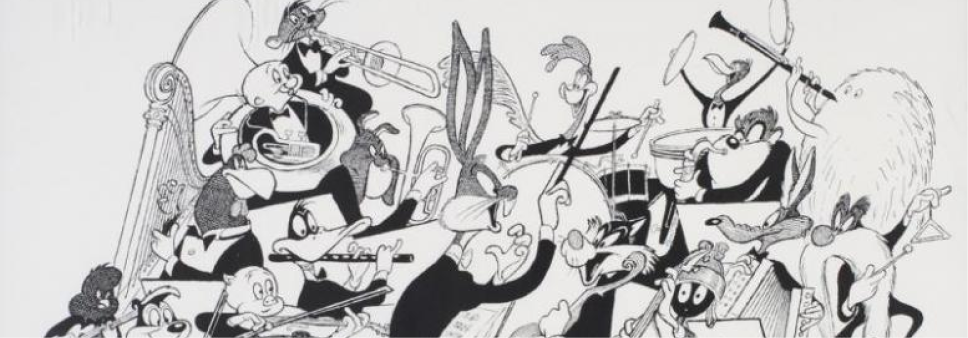
Today, everyone is focused on building better AI agents.
The next bottleneck is orchestration.
We do still have a long way to go before agents are fully capable of handling all the critical workflows inside a company.
However, in our experience agents are already providing incredible value automating early workflows and we're starting to focus more on agents handling tasks in parallel to push productivity even further.
This comes with a few coordination challenges to minimize collisions and conflicts between agents.
Coding agents are the canary in the coal mine.
The best example of this happening today is in coding - arguably the most advanced and capable agents. We see this evidenced by Anthropic's $30B ARR or cyber stocks collapsing on the news of Claude Mythos. There's maximum fear inside technology companies who are most affected by the cost of writing software getting repriced in real time (read about the SaaSpocolypse here, TL;DR it's real).
In other words, coding is the first domain in which agents are dangerously good.
As a result, coordination is quickly becoming the bottleneck in AI coding because people actually want to run multiple agents in parallel today.
There's a lot of momentum around worktrees as an agent orchestration approach where each coding agent has its own isolated copy of the codebase to work on. This week, we've been exploring this idea with Claude Code + Conductor and it's certainly a positive step.
This helps to reduce direct collisions between agents, but worktrees still feel imperfect. For certain tasks, it's simpler to spin up multiple agents locally, working on the same branch (as long as the tasks are sufficiently independent).
We need a solution because all agent domains will eventually run into the same orchestration bottleneck once their agent capabilities pass a certain threshold - at that point we'll want these things to run simultaneously 24/7.
The same bottleneck shows up even more clearly outside coding.
Whilst building an accounting agent inside Flare, we've realised that orchestration isn't just task routing.
Coding already has a mature coordination layer: branches, PRs, diffs, tests, and version control. Other domains like accounting or sales have much less of this infrastructure built in.
The first challenge for us was simply getting agents to operate reliably inside systems of record like QuickBooks, each with its own nuances, permissions, and login flows.
Then there's the high-level coordination problem itself: making sure two agents are not working on the same problem, colliding in the same environment, or losing track of state across a larger project.
For now, humans at Flare still handle this orchestration manually. To support that, we're building better ways to visualise agent projects because we're already starting to outgrow Slack threads.
One core idea for us is that human and agent projects should live together. An agent should feel more like a coworker than a tool. A real coordination layer needs to manage both seamlessly.
This is part of what we call FlareOS: the foundational software that the firm runs on, for humans and agents.
Building the agent is only the start.
The real leverage comes from the orchestration layer.
More articles
Where do $100T companies come from?
Congratulations, you survived the AI jobs apocalypses of 2025 and 2026 (so far)!

Do we need a Company Brain or Nervous System?
AI models are already intelligent enough! So why is it still so hard to deploy AI inside a company?

Agents are the new PCs
At GTC 2026, Jensen Huang framed OpenClaw as the operating system for agentic computers. That feels like the right mental model for what agents actually are becoming.