
Where do $100T companies come from?
 Jack Ryder·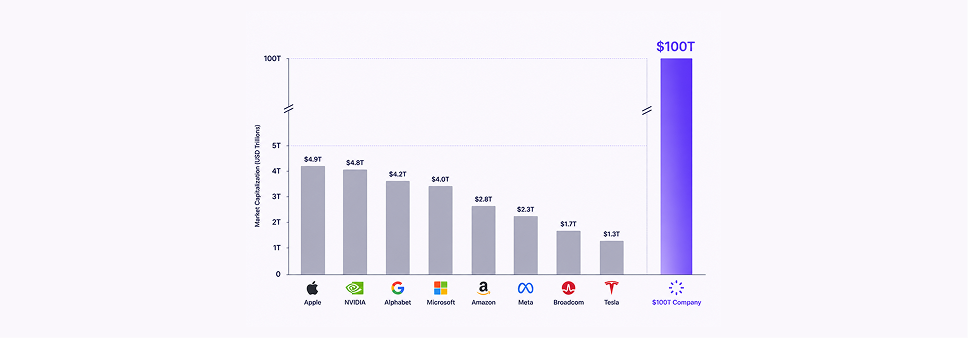
Congratulations, you survived the AI jobs apocalypses of 2025 and 2026 (so far)!
The funny thing is, we've been wrong about the AI jobs debate three separate times in the last year.
Each time we've underestimated what higher productivity actually does. It doesn't just make companies more efficient, it makes them bigger and creates more of them.
1. We conflated jobs with tasks.
Fear may have peaked with the viral Citrini X article 5 months ago and I’d be lying if I said I didn’t lose some sleep over this.
The core argument was that these models are so good, improving so rapidly, especially with coding, that they would be able to automate away every job simply by writing code.
Everyone: “Claude is coming for your job!”
However, when US software engineering jobs kept rising, the bottom fell out of this argument.
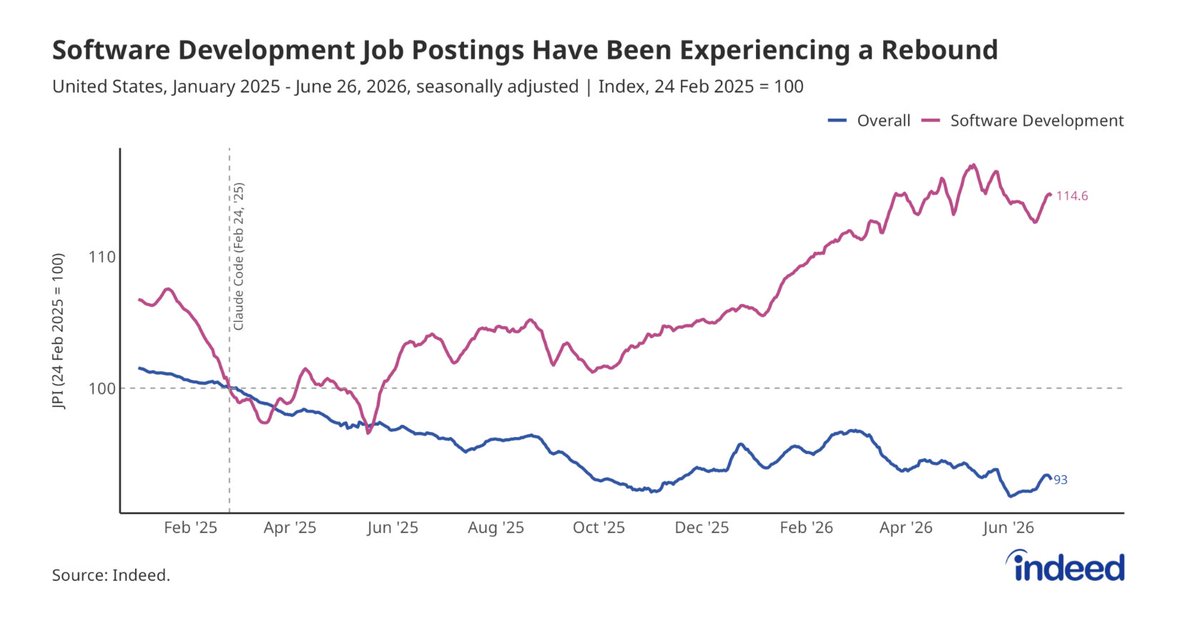
Building software isn't just writing code. It's building products which involves understanding customers, prioritising trade-offs, communicating with teammates, integrating systems etc.
A big mistake here was that we conflated jobs with tasks.
Jensen was one of the first voices I heard preaching the other side. In reality, AI has proved to be more middle-to-middle rather than end-to-end and harder to integrate than we first thought. This is particularly true of jobs that involve a hoard of unique tasks across a plethora of workflows and third party tools (like accounting).
If these models were plug-and-play replacements for employees, Microsoft, OpenAI and Anthropic wouldn't all be building teams dedicated to helping enterprises implement them.
Jason Lemkin put this nicely:
if you have to hire so many forward deployed engineers, your product is probably not very easy to use.
So we confused automating tasks with automating entire jobs.
2. We confused productivity with demand.
Ok, I then thought only creative jobs would continue growing.
The reason being: there is uncapped output potential (and revenue) when a job is creating new digital artefacts.
- Engineers create more software.
- Designers create more designs.
- Marketers create more campaigns.
In these domains, the creative output is directly tied to revenue so we’d obviously see more hiring to exploit this (before your competitor did it).
Whereas, functions with finite output potential like HR or accounting would see teams shrink. There’s only so many tax returns to file or personal development plans to write.
Hang on though, we’re now confusing productivity with demand.
We’re assuming demand stays constant and history suggests something different..
As productivity rises, prices fall, markets expand and demand increases so hiring must increase. Companies will build more products, enter new markets, ship faster - winning creates work.
This is one reason why I think the biggest public companies will get even bigger.
Coatue recently published some interesting public market research which shows the largest public companies increasingly compound into even larger ones.
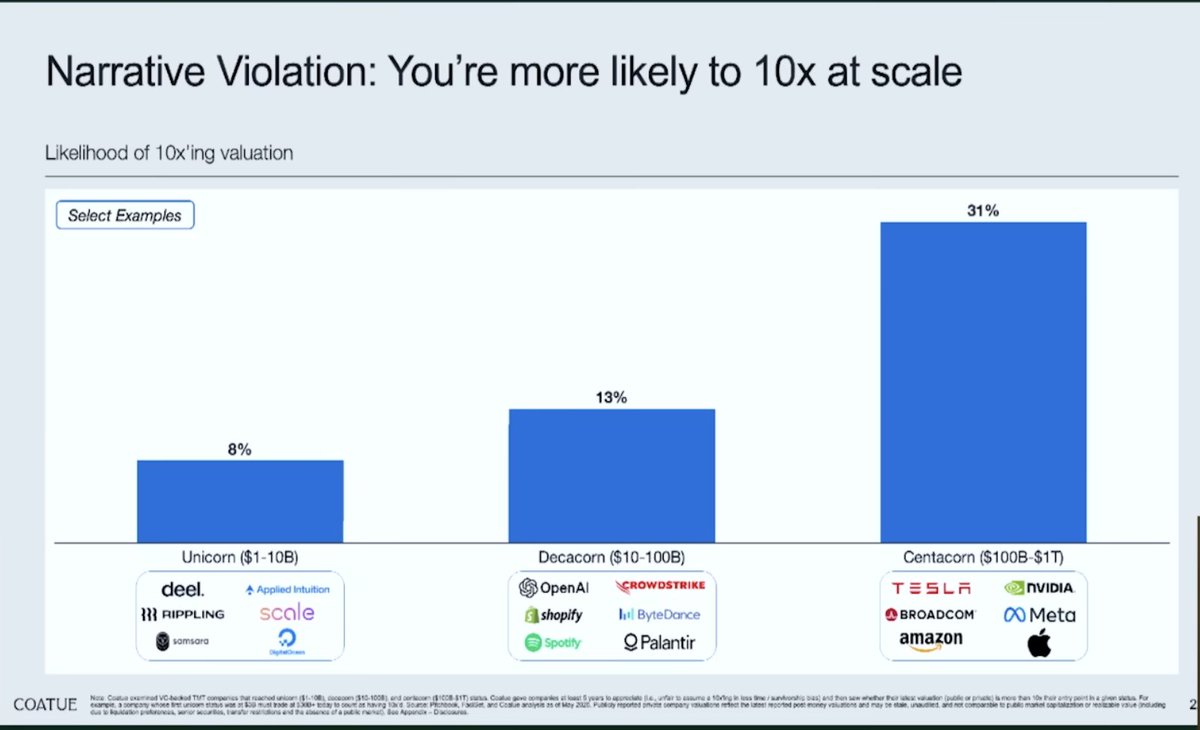
You're more likely to 10x at scale.
If that was happening pre-AI, imagine what happens with all the productivity gains that are in motion.
AI will only accelerate this dynamic.
So why are so many companies announcing AI layoffs?
I'm sure some companies are using "AI" as cloud cover for simply removing bloat, post-pandemic over-hiring corrections, or management teams pricing in productivity gains that have not yet fully materialised.
In some cases though, teams aren't just doing a layoff with better marketing.
Even genuine AI layoffs don't necessarily contradict this. Productivity can increase faster than companies are able (or willing) to expand.
My expectation is that once companies have right sized their teams, learned how to harness the new productivity and started growing faster, hiring will return.
3. We thought AI would concentrate value.
Earlier in the AI cycle, many of us believed the model companies would capture almost all of the value. Every week another startup was supposedly being "murdered by OpenAI."
But we've gradually learned that intelligence is only one ingredient of a great product.
Cursor and Legora aren't just models.
Workflow, UX, context, proprietary data, integrations and trust all create enormous value beyond the intelligence itself.
As models become cheaper and more interchangeable, that differentiation matters even more - not less.
Ironically, commoditising intelligence doesn't reduce the number of software companies, it lowers the barrier to creating them. We're now seeing this in the Stripe Atlas company formation statistics:
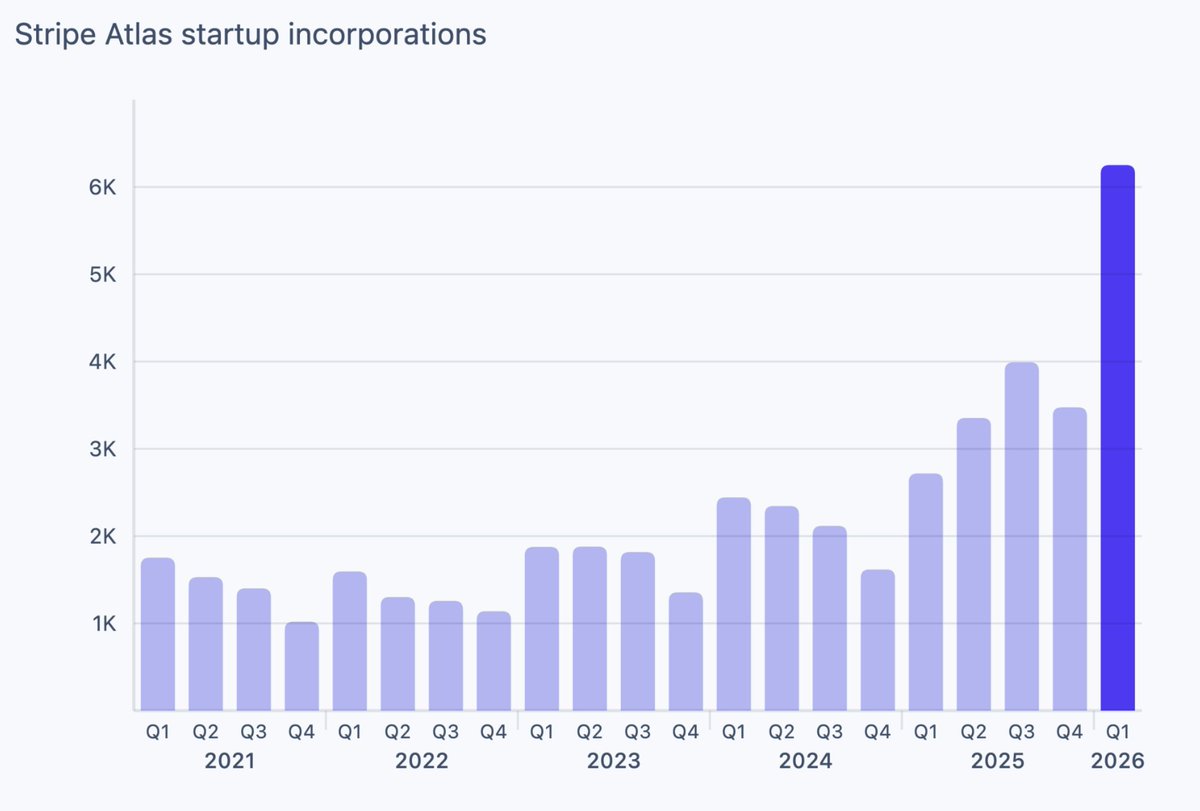
Suddenly founders need less capital, smaller teams and less time to reach product-market fit. That means they can access growth sooner leading to overall more hiring, earlier than before.
This brings us to the question I think we should have been asking all along.
The $100T company
Every major technology wave has produced companies larger than the previous generation.
Think railroads, oil, PCs, Internet, mobile.
AI feels like another order-of-magnitude shift but even despite this we still made a big mistake assuming productivity automatically destroys jobs.
We should instead have been focused on the question 'how much bigger does AI allow companies to become?'
Those productivity boosts will create larger markets.
Larger markets create larger companies.
Lower barriers create more companies.
The combination creates far more economic activity than existed before.
The first $100T company may turn out to be one of the biggest employers in history!
More articles

Do we need a Company Brain or Nervous System?
AI models are already intelligent enough! So why is it still so hard to deploy AI inside a company?

The Great Orchestration
Today, everyone is focused on building better AI agents. The next bottleneck is orchestration.

Agents are the new PCs
At GTC 2026, Jensen Huang framed OpenClaw as the operating system for agentic computers. That feels like the right mental model for what agents actually are becoming.